Get the answers about Canada straight from the sources.
READ INSIGHTS
Putting Canadian data into context
ECONOMY
On December 31, 2025, the UN General Assembly approved a regular budget of $3.45 billion for 2026. All members of the UN are required to contribute, but the amount varies. Learn who contributes the most and what happens when members fail to meet their financial obligations.
How is Ontario’s public transit system funded?

How many Canadians have Registered Retirement Savings Plans?
Many Canadians rely on additional sources of income, such as Registered Retirement Savings Plans or RRSPs, to fund their retirement. Learn how many Canadians have RRSPs.
POPULATION

Across Canada, healthcare spending varies by province and territory. Learn which region of Canada spends the most per capita on healthcare.
Discover what lands Canadians in the hospital most often. In 2023–2024, the top causes were childbirth, COPD/bronchitis, heart failure, pneumonia, and knee osteoarthritis.
Canada’s health care costs reached $336 billion in 2022, averaging $8,645 per person. See how spending has shifted since 1975 and what public funds cover.
Who lives the longest in Canada? In 2023, the longest life expectancies are in Quebec, Ontario, BC, while Manitoba, Newfoundland & Labrador, and Saskatchewan rank lowest.
The Toronto Public Library (TPL) is more than a network of book-lending branches—it is one of the city’s most heavily used public services and a cornerstone of civic life. Learn about its funding and expenses, the scale of its branch network, and patterns of use across locations.
In 2024-2025, Ontario’s Ministry of Colleges and Universities committed $148.5 million in research funding, $90 million less than the previous year. From 2019-2020 to 2024-2025, over $772 billion was committed to early- and advanced-stage projects.
Curious about how many Canadians vote? Since 1867, the average turnout is around 70.4%. Peaks hit 79.4% in 1958 and dipped to a low of 58.8% in 2008.
Following a general election, there are generally two outcomes: the formation of a majority or minority government. We break down what they are and how they function.
HEALTH
ENVIRONMENT
GOVERNMENT
Chart of the week
Bite-sized insights published every Friday.
Canadians are spending more at the pumps. On April 23, 2026, the average price of regular unleaded gasoline across Canada was 174.3 cents per litre. Learn how gasoline prices in Canada have been fluctuating since the start of the conflict in the Middle East.
In 2025, the average age of Canadians exiting the workforce and starting their retirement reached 64.5 years, the same as the previous year, and up from 61.6 years in 2000.
The proportion of Canadian adults aged 18 and older with obesity has been increasing steadily over the past few decades. In 2024, one in three (30.8%) adults in Canada had obesity, compared to one in five (20.5%) in 2000.
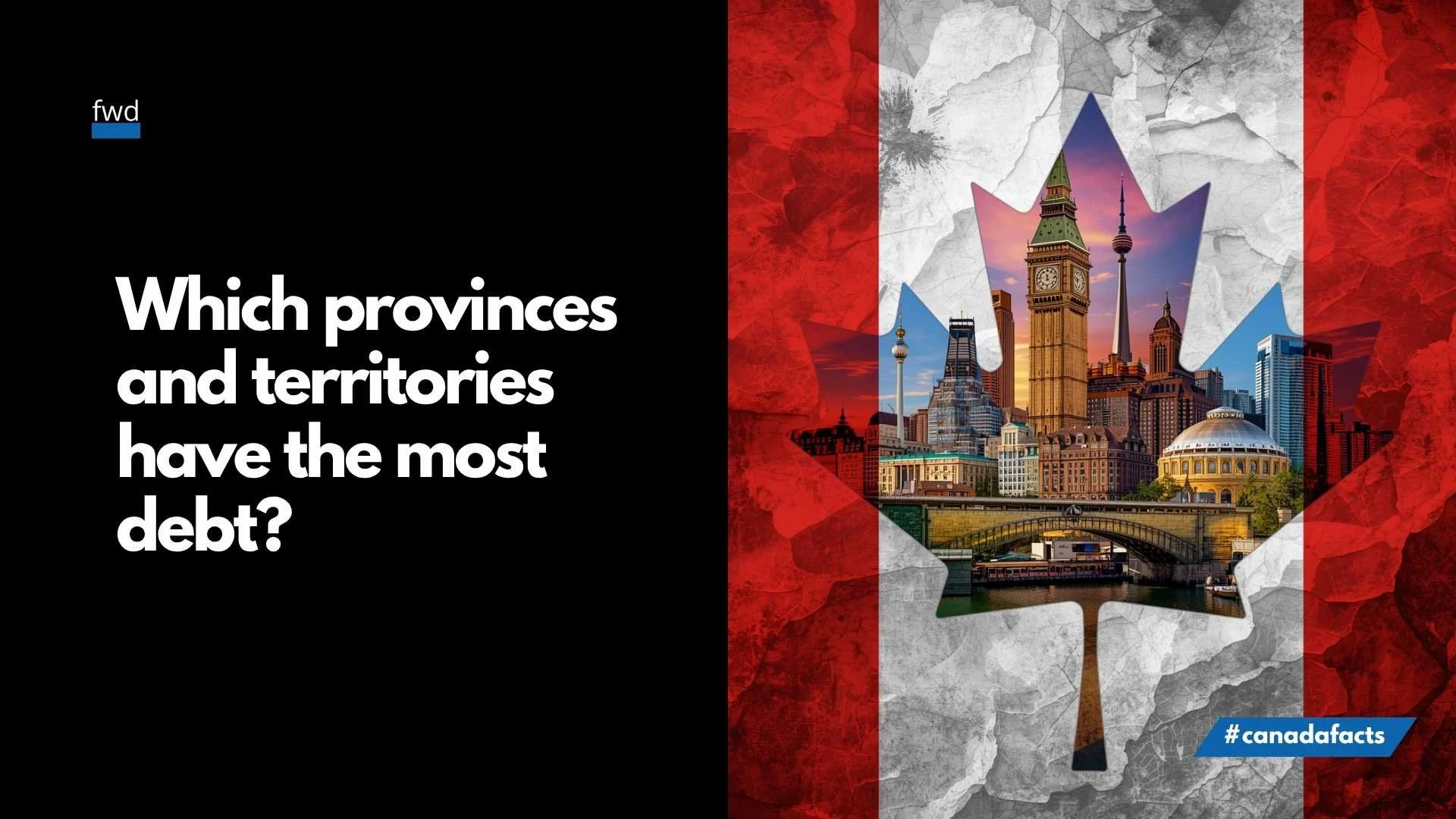
Canadian provinces and territories had a combined total of $841 billion in debt at the end of the 2023-2024 fiscal year. Almost half ($409 billion) of that belongs to Ontario, the most indebted province in the country, followed by Quebec. See where the provinces and territories rank.