What does it cost to operate the Toronto Transit Commission (TTC)?
The Toronto Transit Commission (TTC) is Canada's largest public transit system, and one of the most common modes of transportation people use to get around Toronto. On an average business day, more than 1.3 million trips are taken across the system. In 2024, the TTC carried a staggering 419.9 million passenger trips across its network of buses, streetcars, and subways. This figure reflects the core demand for public transit in Canada’s largest city and comes as post-pandemic ridership continues to rebound.
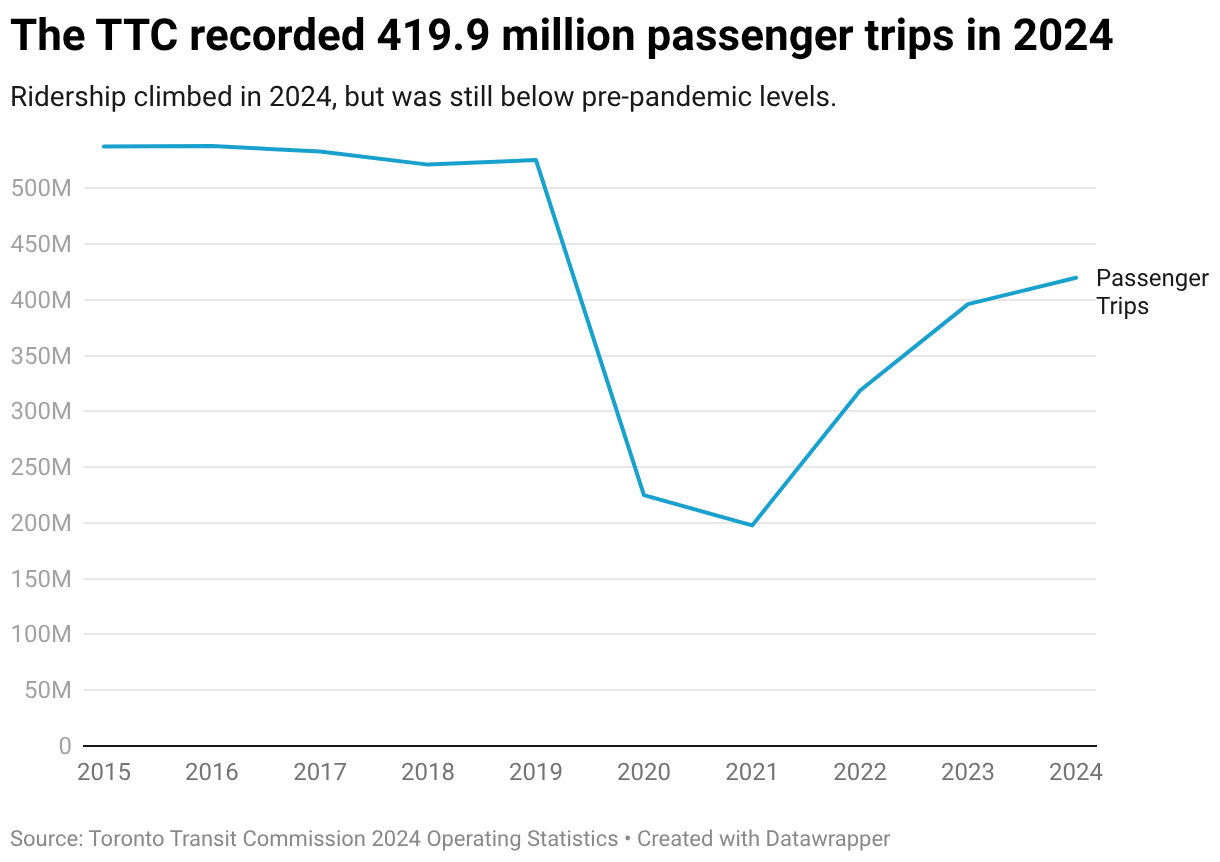
The TTC connects Toronto’s neighbourhoods using a vast network. In 2024 alone, the system included 162 bus routes, 11 streetcar routes, and three subway lines. Since then, the system has added two new light rail lines – Finch LRT and Eglinton Crosstown LRT – and construction of a new subway line, the Ontario line, is underway.
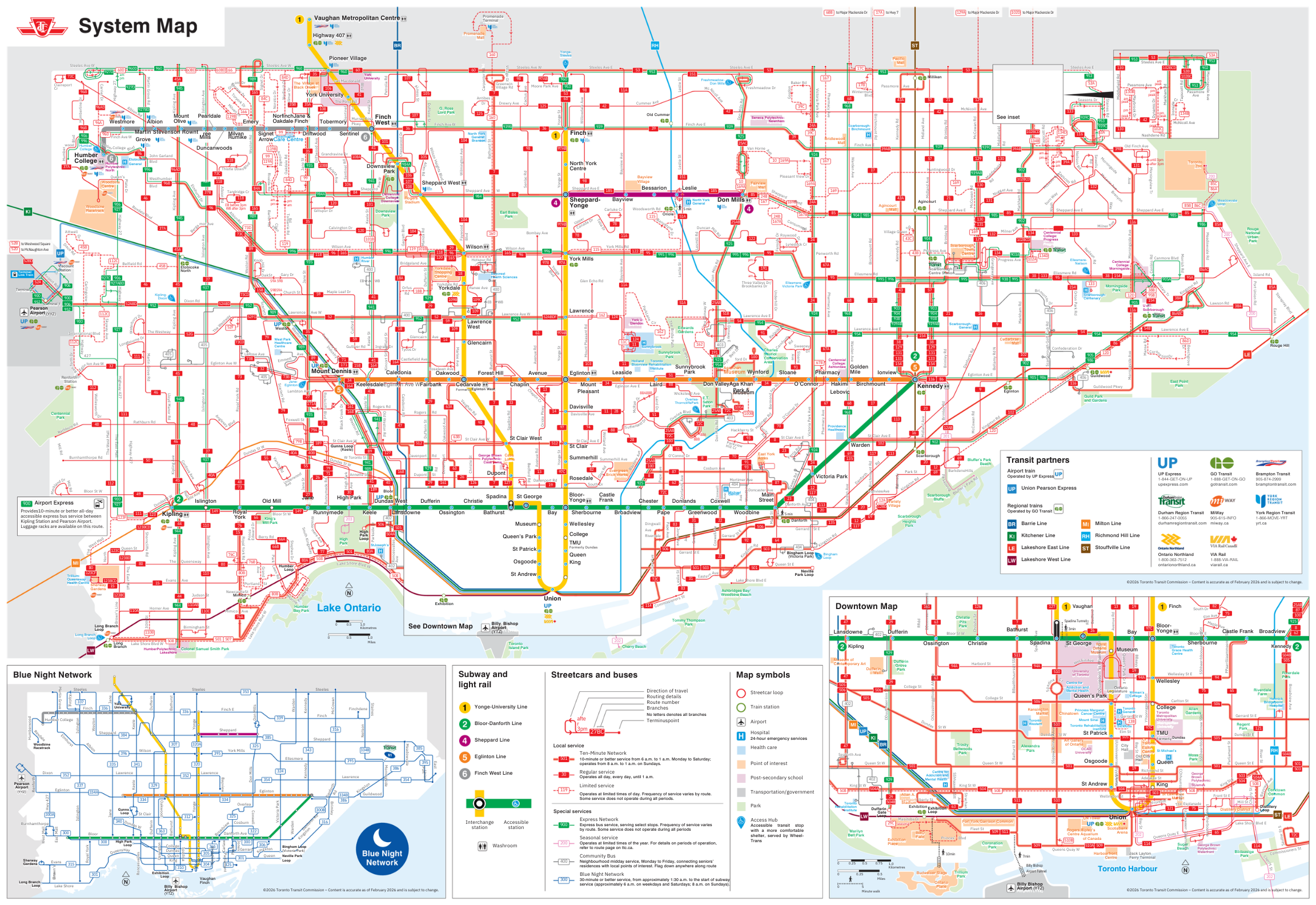
A map of the TTC system including bus routes, streetcar routes, and subway and light rail transit lines.
Source: Toronto Transit Commission.
Buses, subways, and streetcars
Ridership by vehicle type highlights how Toronto residents and visitors navigate the city: buses accounted for over 203 million passenger trips, subway trains delivered 181 million, and streetcars contributed nearly 35 million trips over the year. These figures demonstrate the continued importance of all three modes in moving people efficiently throughout the region.
Operating the fleet at this scale requires a substantial vehicle inventory. In 2024 the TTC operated 2,038 buses, including articulated and accessible models, 233 streetcars, and 848 subway cars, all actively serving routes across the city. Additionally, TTC vehicles collectively logged more than 232 million kilometres in regular revenue service, illustrating the enormous scale of daily operations needed to maintain frequent, reliable transit service.

Wheel-Trans: TTC’s specialized accessible transit service
Alongside conventional services, the TTC operates Wheel-Trans, a specialized door-to-door accessible transit service for riders with physical mobility limitations who find regular buses, streetcars, or subways difficult to use. Wheel-Trans provides service 24 hours a day, including connections beyond city limits to major transfer points and the airport, and plays a critical role in ensuring transit accessibility for all residents.
In 2024, Wheel-Trans carried 3.54 million passenger trips, an increase of over 541,000 rides compared with 2023, and served an average of nearly 9,700 daily riders—an important reflection of growing demand for accessible transit. The service logged 27.4 million kilometres of operation and offered more than 1.34 million service hours, illustrating both its reach and complexity. The number of active registrants—people who have used Wheel-Trans in the past year—also rose to 42,947, further showing that demand for accessible, door-to-door service remains significant. Wheel-Trans vehicles and contract vehicles totaled nearly 1,952 revenue vehicles in service in 2024.
How much does it cost to operate the TTC?
Figures from the TTC’s 2024 Annual Report show that the agency’s 2024 operating expenses were $2.37 billion, an increase of $19 million from $2.18 billion the year before. That works out to $5.64 per passenger, and $10.21 per kilometre.
The TTC is funded through a variety of sources. These include subsidies from the city, passenger revenue (fares), ancillary revenues (property rental and advertising), and funding from the provincial government. In 2024, revenue from passenger fares totaled $1.02 billion, with government subsidies totalling $1.36 billion. These two revenue streams accounted for almost 90% of the agency’s total revenue for the year.
In recent years, the TTC has been relying more on government subsidies to cover its operating costs. In 2015, about 70% of the TTC’s operating expenses were covered by passenger fares, with the remainder covered by government subsidies. In 2024, fares only covered 49% of operating expenses, with the remainder coming from government subsidies.
