What does it cost to operate the Toronto Public Library?
The Toronto Public Library (TPL) is more than a network of book-lending branches—it is one of the city’s most heavily used public services and a cornerstone of civic life. With 100 locations across the city, the Toronto Public Library is the largest public library system in the country. These libraries play a vital role in communities by providing free access to information, technology, and shared spaces that support learning, employment, cultural participation, and social connection. In a city as large and diverse as Toronto, the public library system helps level the playing field, offering resources that many residents could not otherwise afford, from internet access and job-search support to children’s programming and lifelong learning opportunities. This article takes a closer look at how the Toronto Public Library operates, examining its funding and expenses, the scale of its branch network, patterns of use across locations, and what the data reveal about the library’s role in a rapidly growing city.
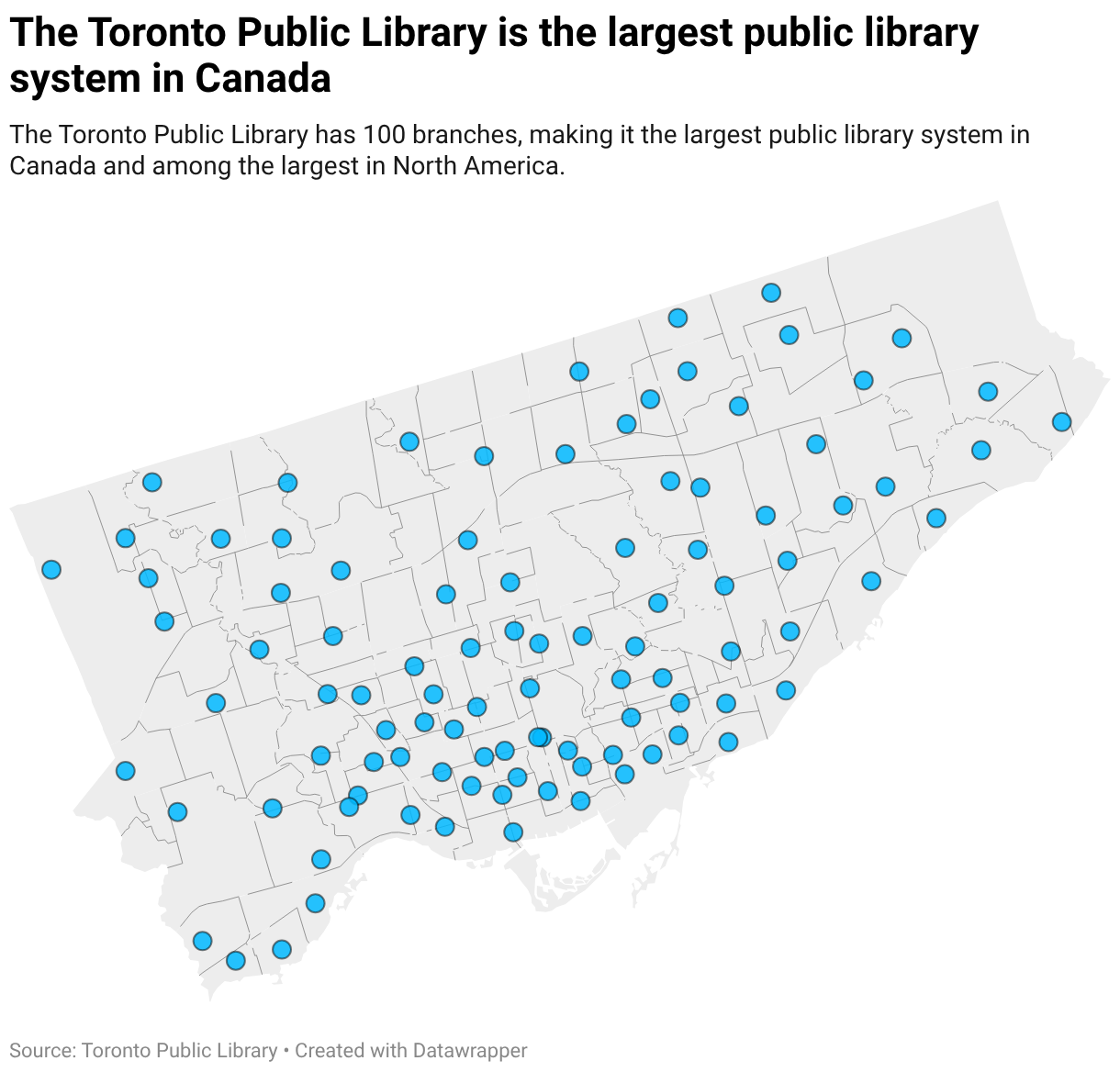
Libraries are community hubs
Libraries serve as important community hubs, connecting Toronto’s 3 million residents with critical services and resources. Toronto is a city of neighbourhoods, and its public libraries reflect the distinct communities that surround them. Programs, materials, and services often reflect the demographics of the neighbourhoods in which the libraries are located. For example, materials in widely spoken languages are usually available, and book displays and artwork may reflect the culture of the local community. In addition to books, magazines, and other resources, many of the city’s libraries also have study rooms, computers, internet access, printer stations, kids’ zones and three locations even have community theatres that could be rented out.
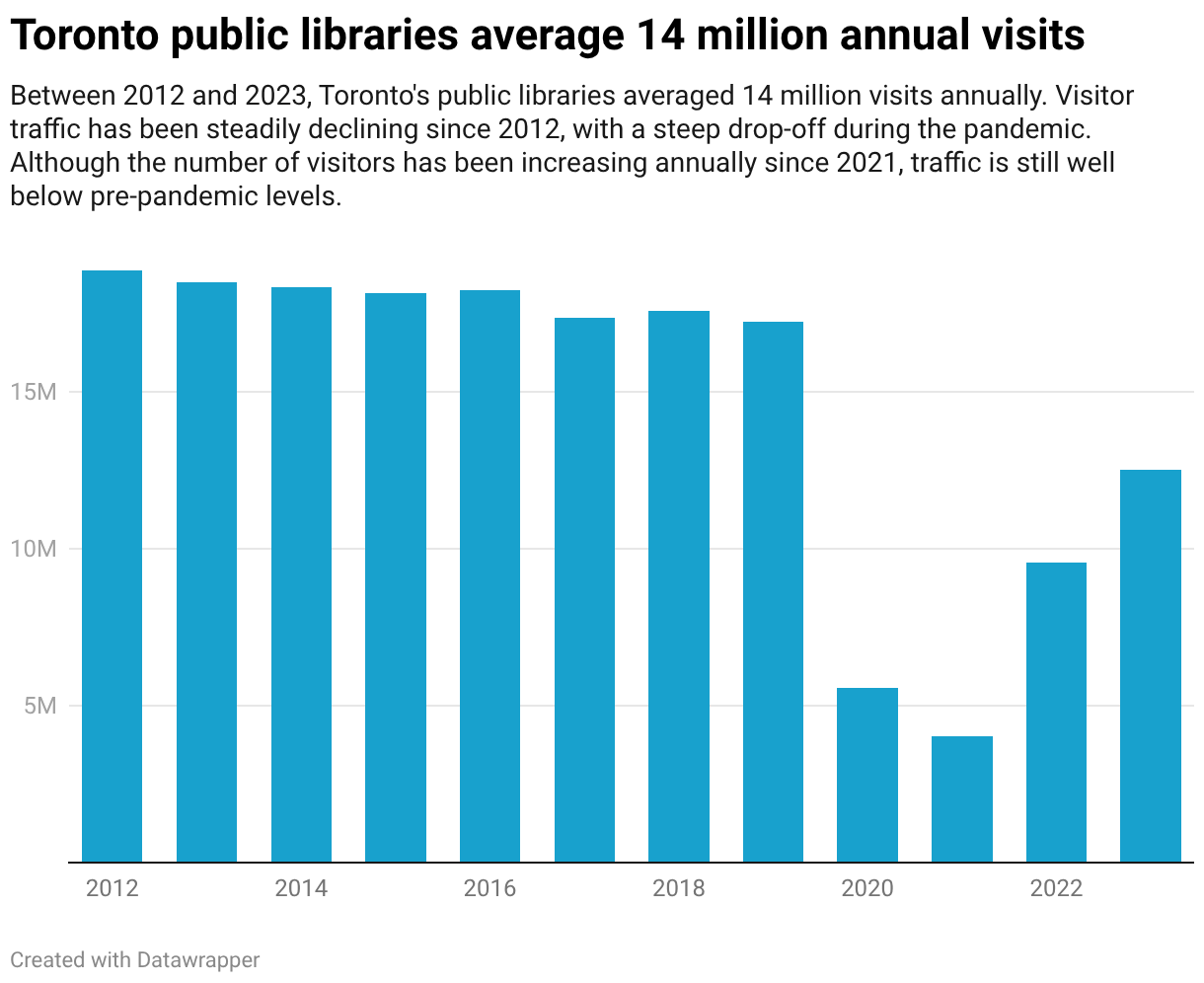
In 2023, more than 12 million visits were recorded at Toronto’s public libraries, figures below the annual average of 14 million visits recorded between 2012 and 2023. Visitor traffic has been steadily declining since 2012, with a steep drop-off during the pandemic. Although the number of visits has been increasing annually since 2021, it is still well below pre-pandemic levels.
The busiest library is the North York Central Library located in the north end of the city. In 2023, it recorded 1,151,777 visits. Meanwhile, the least busy library was Armour Heights, which recorded fewer than 7,000 visits. The Toronto Public Library counts visits using sensors located at branch entrances and this activity is recorded during scheduled operating hours. Visits are recorded at the time of entry and may count the same individual multiple timees if they leave and re-enter a branch at a later point in time.

What does it cost to operate the Toronto Public Library?
In 2025, the Toronto Public Library had an operating budget of $273,301,286, an increase of around 8% from $252,293,362 in 2024. TPL’s budget has been increasing steadily year-over-year, growing by almost one hundred million dollars between 2012 and 2025. Staff-related expenses, employee salaries and benefits, are the top expenditure, accounting for more than 70% of TPL’s total operational budget throughout this period. This is followed by operations and administration expenses, which include information technology and facilities, and others. The cost of library materials makes up the remainder of annual operating expenses.

Staff-related expenses, employee salaries and benefits, are the top expenditure, accounting for more than 70% of TPL’s total operational budget. This is followed by operations and administration expenses, which include information technology and facilities, and others. The cost of library materials makes up the remainder of annual operating expenses.

The Toronto Public Library is funded primarily by the City of Toronto — more than 90% ($254,544,041) of the library system’s funding comes from the city. The remainder is supplemented by fines and fees charged to library patrons and provincial government grants and donations, among others.