Released: Friday, February 13, 2026
Electric vehicle charging stations are a critical part of the EV infrastructure. Since 2016, the Canadian government has invested over $1.2 billion to fund the construction of a network of charging stations across the country as part of efforts to help make the transition to electric vehicles easier for Canadians. As of February 12, 2026, Canada had 14,469 public charging stations with a total of 38,808 charging ports. The government recently announced that it will commit an additional $84.4 million to add more than 8,000 new public charging stations through partnerships with private-sector partners and other levels of government. Get a deeper dive here.
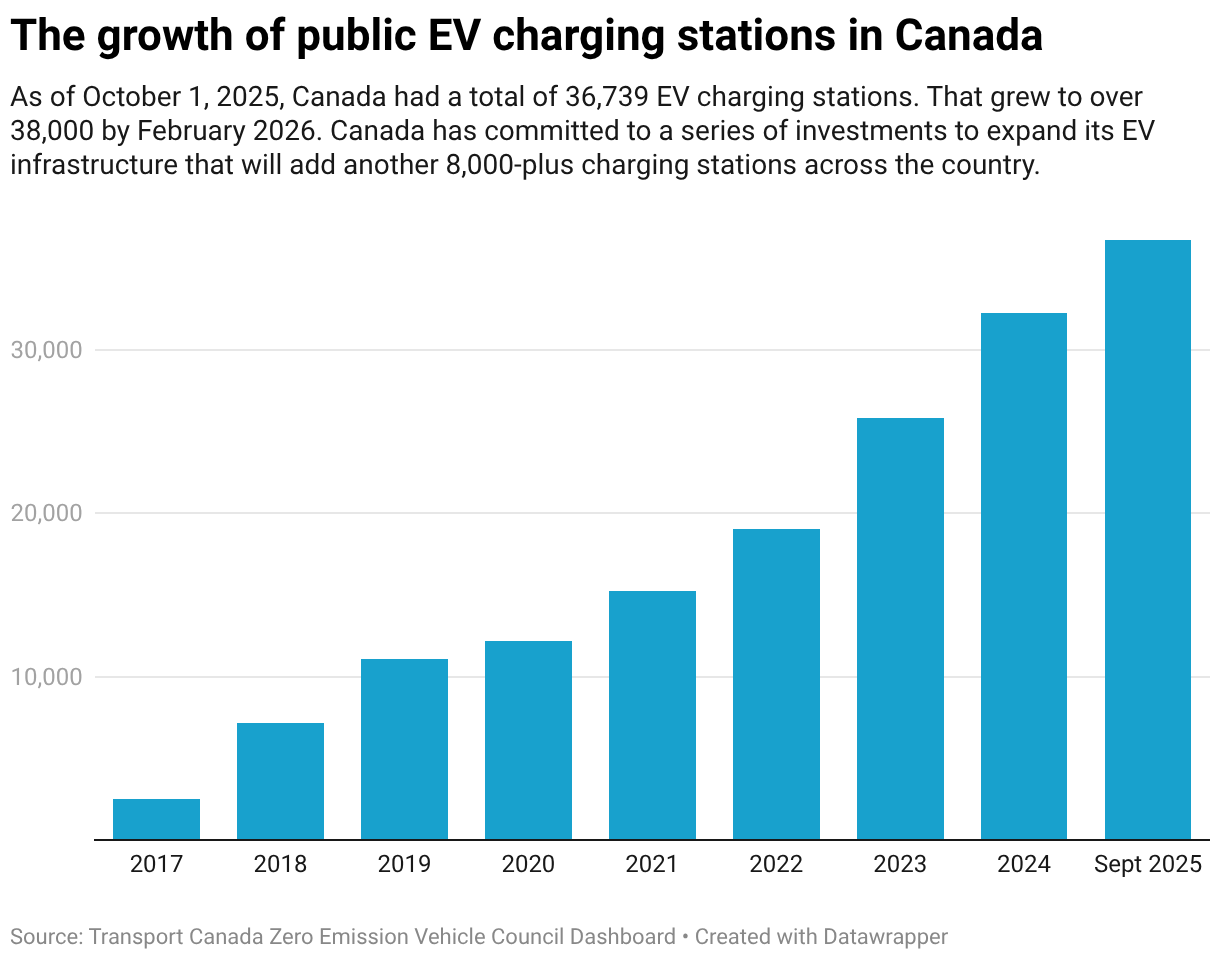
Data for this week’s chart comes from Transport Canada’s Zero Emission Vehicles Council Dashboard.
Chart of the Week
Discover powerful insights, one chart at a time. Each week, we feature a data-driven visual that highlights a key trend, issue, or story shaping Canada. See more here.
Tedjo’s focus on affordability and safety propelled him to victory, toppling incumbent Carolyn Parrish, former mayor Bonnie Crombie, and Councillor Dipika Damerla along the way.
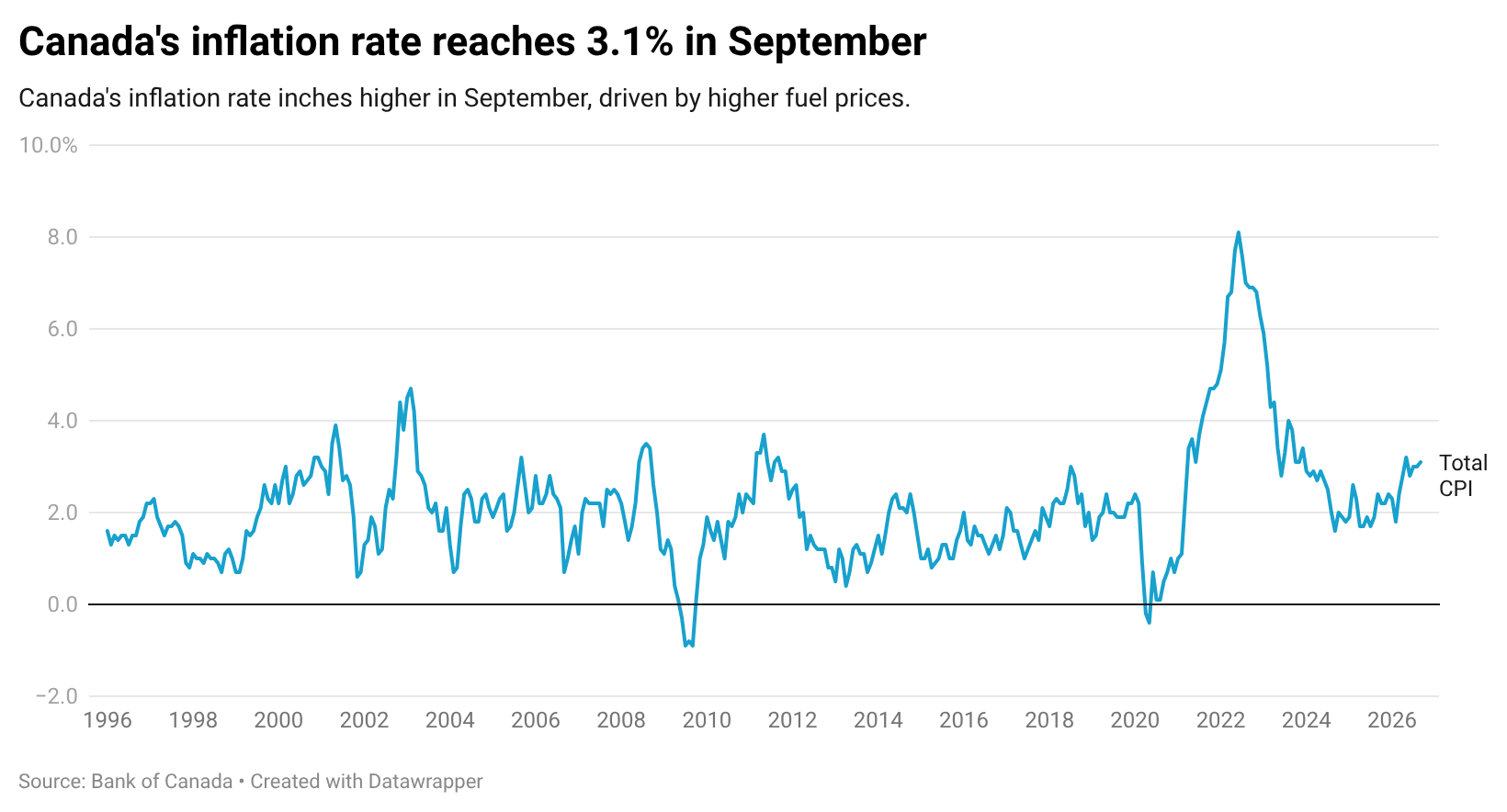
In September, Canada’s consumer price index, a core inflation metric, rose to 3.1%, up 0.1 points from August, driven by higher fuel prices. Economists are closely monitoring inflation to gauge whether the Bank of Canada will raise rates at its next interest rate announcement scheduled for October 29, 2026.
Canadian mothers are having children later than ever. The average age at childbirth reached a record 31.9 years in 2025, up from 27.8 in 1991. Discover the factors behind this shift and its impact on fertility rates.
You may also be interested in…
During the 2025 calendar year, Canada's military exports to non-U.S. destinations reached approximately $2.045 billion with Saudi Arabia as the top recipient of Canadian military exports. See where other countries rank.
Servicing debt takes away much-needed funds that otherwise could be used to support programs and projects. Learn which provinces and territories have the most debt.
In 2024-2025, the Government of Ontario collected $226.2 billion in revenue. That’s more than a $20 billion or a 10% increase from the previous year. The largest source of revenue is personal income tax which reached $55.7 billion.
In the 2024-2025 fiscal year, the Government of Alberta collected $82.5 billion in revenues, up approximately 10.3% from $74.7 billion in the previous fiscal year.
The latest figures from Statistics Canada show that Canada’s economy grew by 1.9% in 2025. Growth varied across the country. All provinces and territories experienced growth except for the Northwest Territories, which reported the lone decline. See how growth varied across the country.