| #CanadaFacts
Chart of the Week
Discover powerful insights, one chart at a time. Each week, we feature a data-driven visual that highlights a key trend, issue, or story shaping Canada. Whether it’s the economy, environment, health, or trade, our weekly chart provides context, commentary, and credible sources to help you make sense of the numbers. Our Canada Facts series explores insights about Canada, all backed by solid data and designed to keep you informed and intrigued.
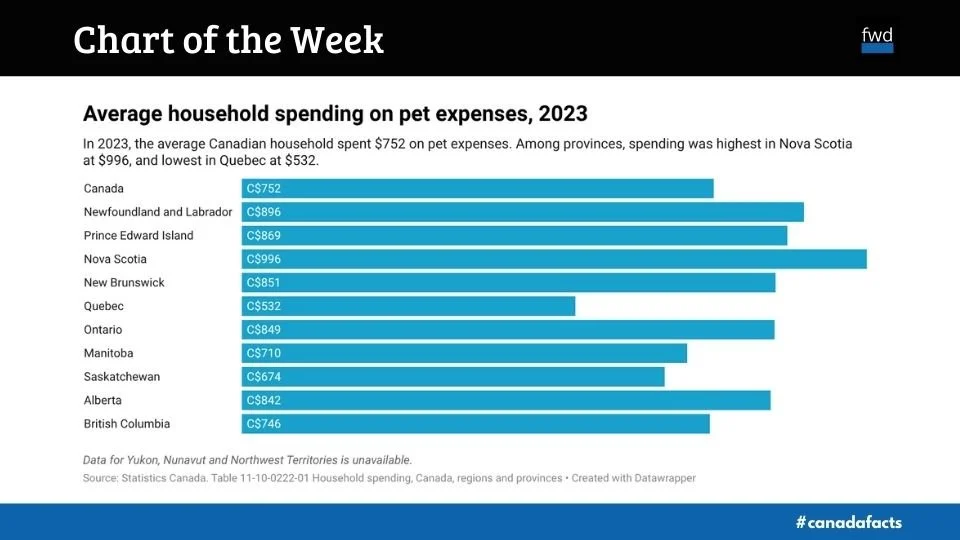
The average Canadian household spent $752 on pet expenses in 2023
In 2023, the average Canadian household spent $752 on pet expenses, which includes food and the cost of pet care (veterinary visits). Among provinces, average household pet expenses were highest in Nova Scotia at $996 and lowest in Quebec at $532.
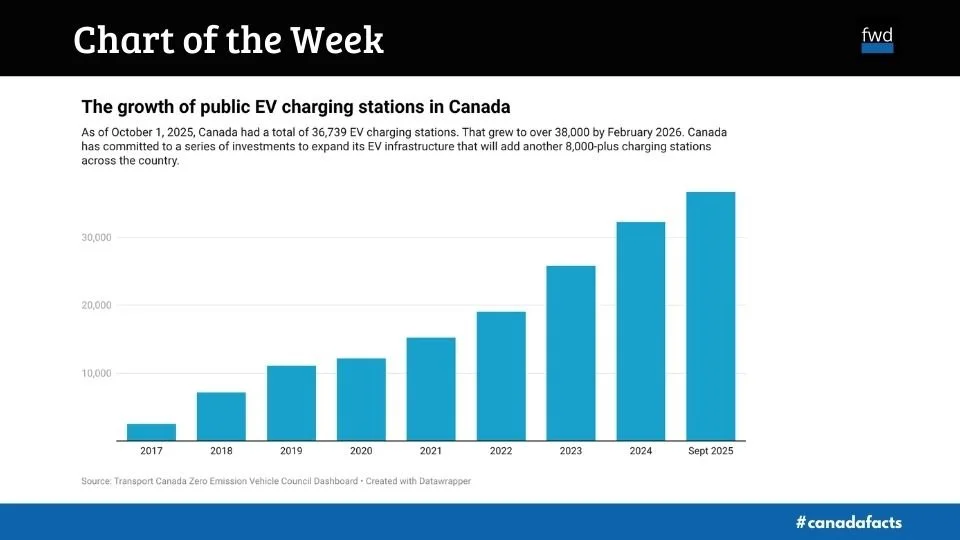
Canada’s EV charging station network is growing
Canada has committed to expanding its electric vehicle charging network. Since 2016, it has spent $1.2 billion to build out a network of more than 14,000 charging stations with 38,000-plus charging ports. It plans to scale this up over the next few years by adding more than 8,000 new charging locations. See how the network has grown since 2016.
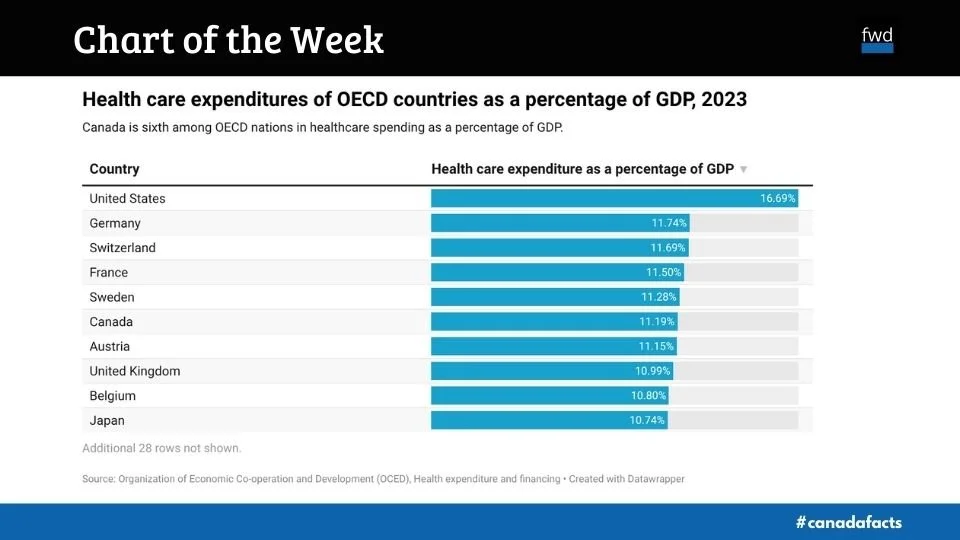
Canada among top spenders on health care
How and what countries spend money on provides insight into their priorities. In 2023, total health care spending in Canada represented 11.18% of its GDP, placing it sixth overall among OECD countries in overall health care spending as a percentage of GDP and puts it in a group of higher health care spending countries alongside France, Sweden, and the United Kingdom. See where other countries rank.
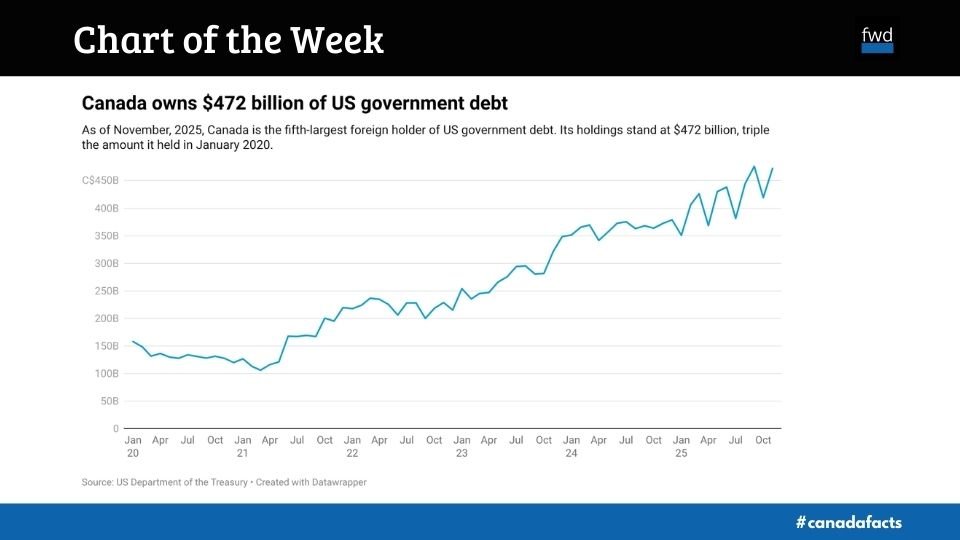
Canada is the fifth-largest holder of US debt
The US national debt stands at $37.64 trillion, about a quarter of which is owned by foreign countries through US Treasury Securities such as T-bills, T-notes, and Treasury bonds. As of November 2025, Canada is the fifth-largest foreign owner of US debt. See how Canada’s ownership of US debt has changed since 2020.