Released: March 13, 2026
Results from the Survey on Early Learning and Child Care Arrangements conducted by Statistics Canada indicate that in early 2025, more than one-third (35%) of children aged 6 to 12 attending school were in child care across Canada. Younger children were more likely to be in child care than their older peers. Just under half (47%) of children aged 6 to 8 were in child care compared to 33% of children aged 9 to 10 and 20% of children aged 11 to 12. The survey also looked into types of childcare. The most common arrangement of child care was before- or after-school programs (52%), followed by care by a relative other than a parent or guardian (38%).
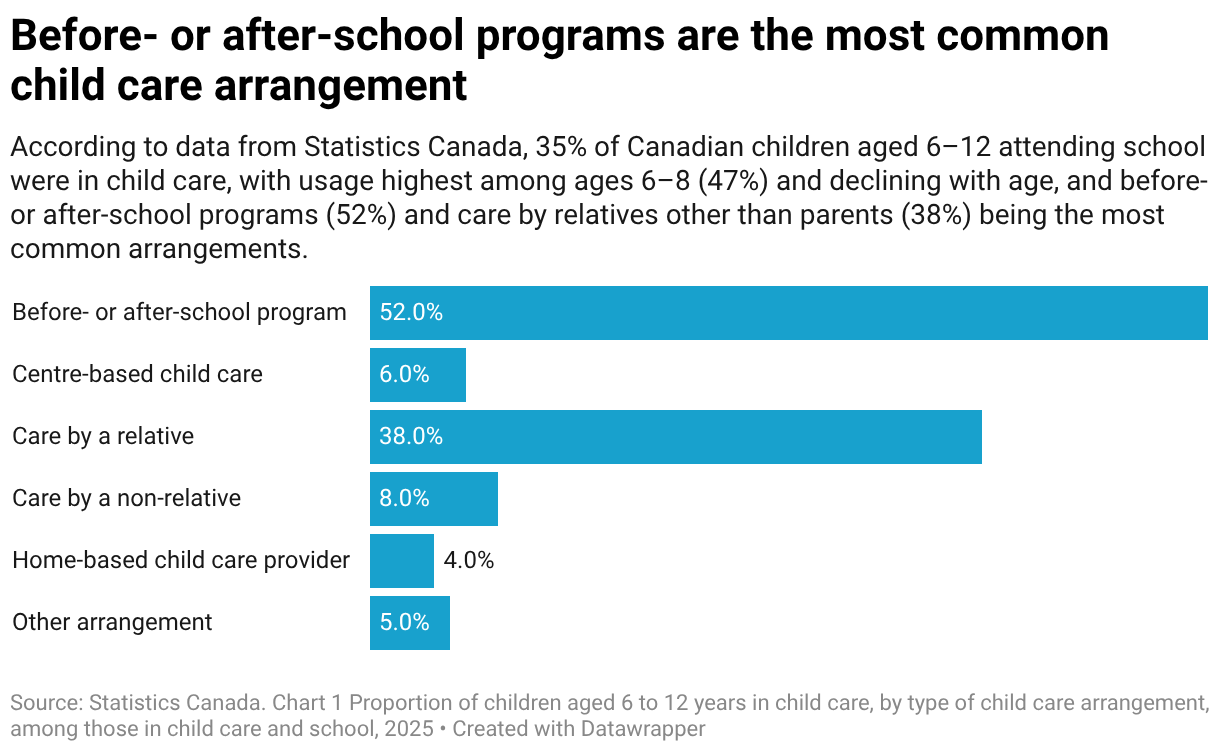
Data for this week’s chart comes from Statistics Canada Chart 1: Proportion of children aged 6 to 12 years in child care, by type of child care arrangement, among those in child care and school, 2025.
Chart of the Week
Discover powerful insights, one chart at a time. Each week, we feature a data-driven visual that highlights a key trend, issue, or story shaping Canada. See more here.
Canadian mothers are having children later than ever. The average age at childbirth reached a record 31.9 years in 2025, up from 27.8 in 1991. Discover the factors behind this shift and its impact on fertility rates.
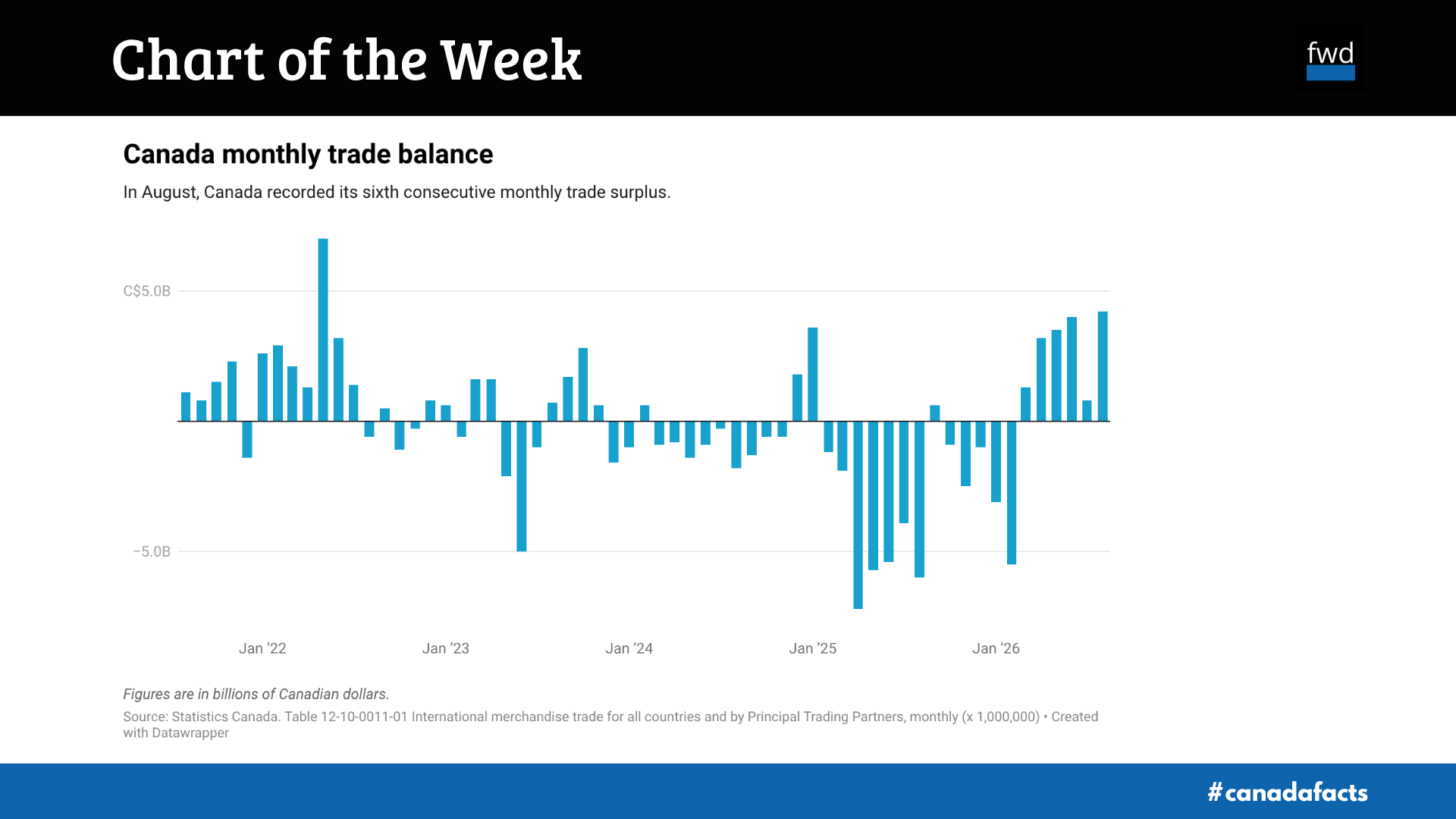
Canada recorded its sixth consecutive trade surplus in August, driven by higher exports and lower imports. That month, exports reached $77.8 billion while imports were valued at $73.7 billion for a trade surplus of $4.1 billion.
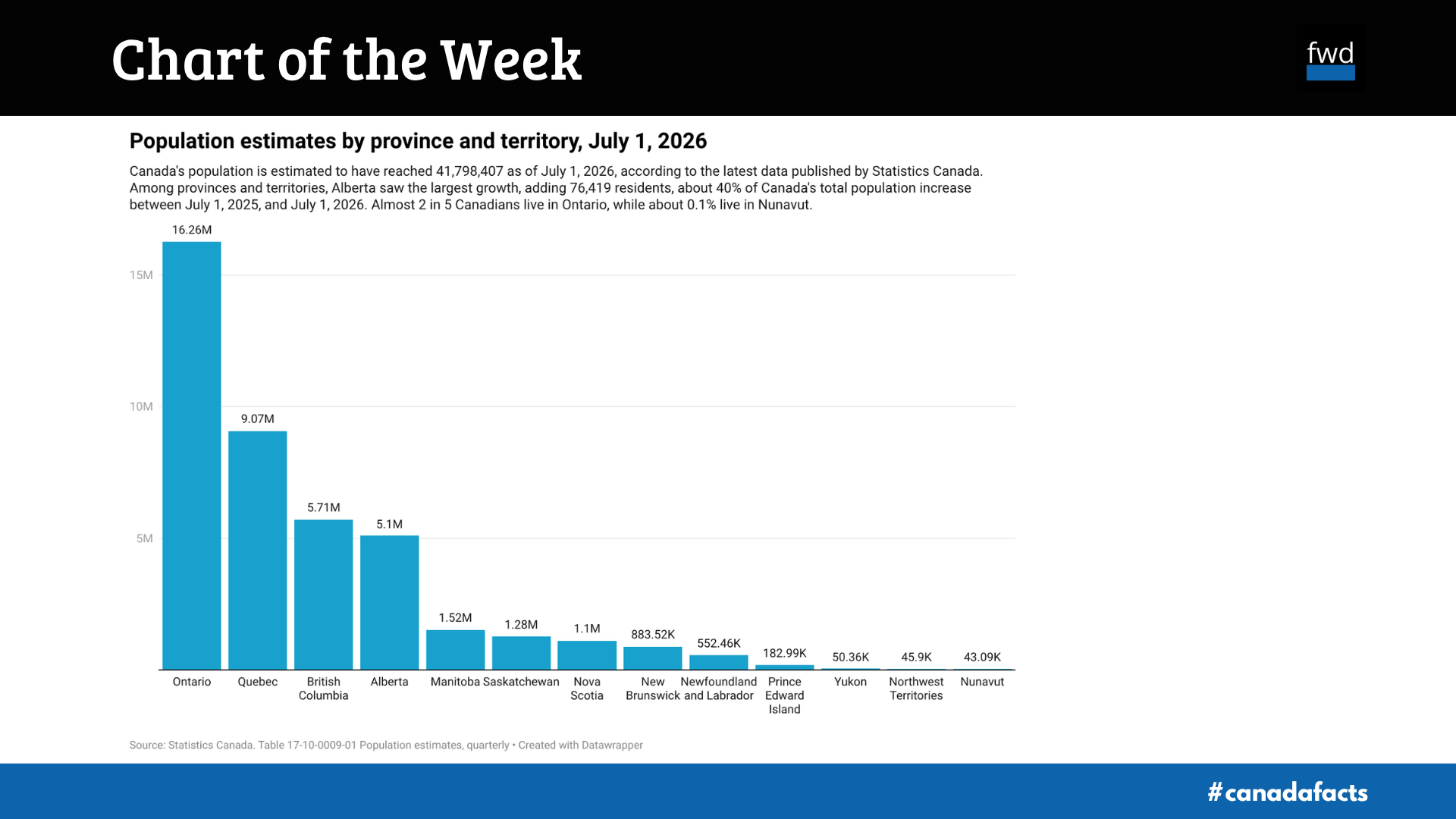
Canada’s population is estimated to have reached 41,798,407 on July 1, 2026, according to the latest data released by Statistics Canada. Here’s a breakdown of Canada’s population by province and territory.
You may also be interested in…
During the 2025 calendar year, Canada's military exports to non-U.S. destinations reached approximately $2.045 billion with Saudi Arabia as the top recipient of Canadian military exports. See where other countries rank.
Servicing debt takes away much-needed funds that otherwise could be used to support programs and projects. Learn which provinces and territories have the most debt.
In 2024-2025, the Government of Ontario collected $226.2 billion in revenue. That’s more than a $20 billion or a 10% increase from the previous year. The largest source of revenue is personal income tax which reached $55.7 billion.
In the 2024-2025 fiscal year, the Government of Alberta collected $82.5 billion in revenues, up approximately 10.3% from $74.7 billion in the previous fiscal year.
In September, Canada’s consumer price index, a core inflation metric, rose to 3.1%, up 0.1 points from August, driven by higher fuel prices. Economists are closely monitoring inflation to gauge whether the Bank of Canada will raise rates at its next interest rate announcement scheduled for October 29, 2026.